Carbon accounting built on your energy data.
For most industrial operations, energy is the largest source of emissions. We calculate your Scope 1 and Scope 2 emissions automatically from the same data that measures your energy performance, then build a practical roadmap to reduce them.

Carbon intelligence & decarbonisation
From energy data to carbon intelligence: automated accounting and a practical roadmap to lower your footprint.
- Automated GHG accounting
- Real-time carbon footprint tracking
- Scope 1 & Scope 2 emissions
- Energy-related emissions
- Carbon footprint assessment
- Emissions performance monitoring
- Decarbonisation opportunities & roadmaps
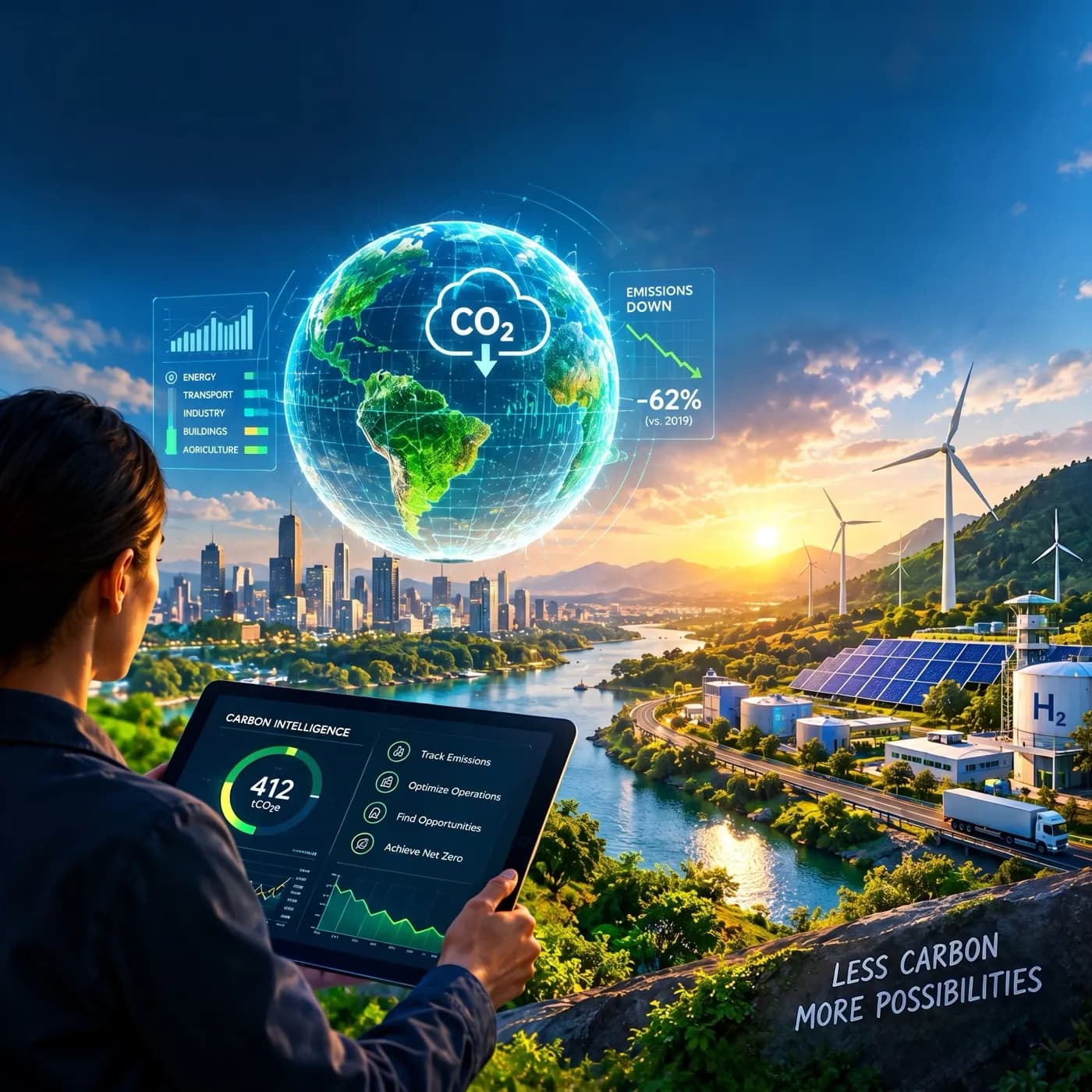
From energy data to a decarbonisation roadmap
Boundaries & sources
We define organisational and operational boundaries and list every emission source, following the GHG Protocol.
Emission factors
Each fuel and electricity source is matched with the appropriate emission factors, using GWP-100 values.
Automated calculation
Scope 1 (direct fuel combustion) and Scope 2 (purchased electricity) emissions are calculated automatically as new energy data arrives.
Footprint & hotspots
You see your carbon footprint by site, source and period, and which activities drive it.
Decarbonisation roadmap
We identify and prioritise reduction opportunities (efficiency, fuel switching and electrification) with their cost and emissions impact.